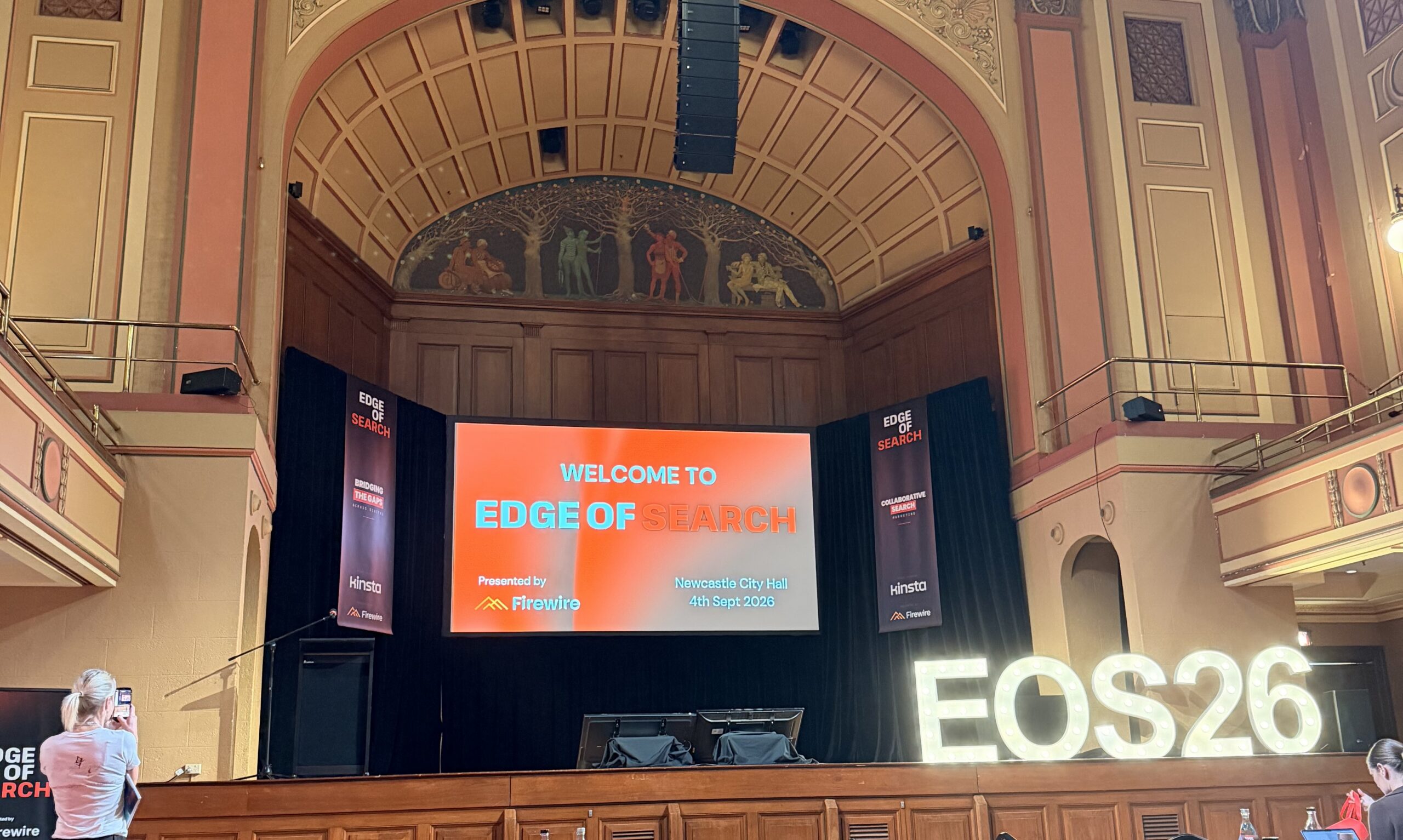
At The Edge of Search conference in Newcastle earlier this year, Luke Gosha, Head of Search & AI Strategy at Edge Marketing, made a point that has stuck with me ever since: SEO is now a function of the whole marketing ecosystem. It can’t sit in a silo anymore. Showing up in AI search depends on everything your business does, not just your website. (He expands on this in a recent piece for Mediaweek if you’d like to read more.)
I couldn’t agree more. And for small and medium businesses, I think it’s one of the most encouraging things to come out of the AI conversation so far. If winning AI search comes down to great marketing, you don’t need a huge budget or a technical team to compete. You need to do the fundamentals well, and do them consistently.
So what does that actually look like for a local business? Let’s get practical.
Why this levels the playing field
When someone asks ChatGPT, Gemini or Google’s AI Mode to recommend a business, the AI isn’t just looking for the best-optimised web page. It’s trying to work out who’s genuinely credible. It pulls together what you say about yourself, what your customers say, and what others say about you, and looks for a consistent story.
That’s a very different game from chasing keywords. A national competitor with a big SEO budget can outrank you for a search term. It’s much harder for them to outdo you on local reputation, real customer relationships and genuine expertise in your patch.
“Small businesses often assume AI search is something for the big players to worry about. In reality, a lot of what AI rewards (real reviews, local knowledge, a genuine community presence) are things good local businesses already have. The work is making sure it’s visible.”
— Angela Henderson, Client Services Director, Method Marketing
What this looks like in practice
Here’s how three typical Hunter businesses might put this into action.
An electrician in Lake Macquarie
Rather than relying on a services page and hoping for the best, they:
- Keep their Google Business Profile fully up to date, listing every service and suburb they cover, with fresh job photos each week
- Send an automatic text after each job asking for a review, and personally reply to every one
- Film short videos on their phone answering the questions customers ask every day (“Do I need a switchboard upgrade before I install solar?”) and post them to YouTube and Instagram
- Chime in helpfully when someone asks for electrical advice in local Facebook groups
- Clearly show their licence and accreditations across their website and profiles
A café in Newcastle East
Beyond a nice Instagram feed, they:
- Put their full menu, dietary options, accessibility details and opening hours on their Google Business Profile, and keep the photos current
- Encourage reviews on Google and TripAdvisor, and respond to all of them
- Pitch themselves to local food writers, “best coffee” lists and community newsletters
- Team up with nearby businesses (their coffee roaster, the bakery supplying their pastries, the gym down the road) to cross-promote
- Replace their PDF menu with a plain-text menu on their website that both people and AI can easily read
An accounting practice in Maitland
Instead of relying on referrals alone, they:
- Have senior staff post practical advice on LinkedIn from their own profiles, drawn from real client situations (more on why LinkedIn matters for AI search)
- Publish content only they could write, like “The five tax mistakes we see Hunter small businesses make every June”
- Add client testimonials and short case studies to their website
- Offer comment to local media around tax time and budget announcements
- Turn the questions clients ask most often into a proper FAQ section
None of these businesses are doing anything exotic. They’re just doing good marketing in more of the places their customers look.
How to put it into action: a step-by-step approach
Here’s the process we use with clients to turn “do great marketing” into something you can actually plan and measure.
Step 1: Find out what AI already says about you
Open ChatGPT, Gemini and Google, and ask the questions your customers would ask. “Who’s the best [your service] in Newcastle?” “Is [your business name] any good?” “What does [your business] specialise in?”
Take note of whether you show up, what’s said, and which sources are being referenced. Then do the same for two or three competitors. It’s the quickest way to see where the gaps are.
Step 2: Get your facts straight everywhere
AI gets confused by mixed messages. Check that your business name, address, phone number, services, service areas and hours are consistently the same across your website, Google Business Profile, social profiles and any directories you’re listed in. Make sure it’s clear what you do, who you do it for and where.
Step 3: Build your proof
Reviews, testimonials and case studies are what turn a claim into something believable. Make asking for reviews part of your process, not something you remember every six months. Ask your happiest clients if you can share their story.
“Reviews are one of the easiest wins we see. Most businesses have plenty of happy customers, they just don’t have a system for asking. A simple automated request after a sale or job can make a huge difference within a few months.”
— Katie Cowling, Method Marketing
Step 4: Share what you know
Generic content is everywhere now, and AI can churn it out in seconds. What it can’t copy is your experience. Write and film content based on real projects, local knowledge, your own data and your honest opinions. A good starting point is simply listing the ten questions your team answers most often, and answering each one properly.
Step 5: Get others talking about you
What others say about you carries more weight than what you say about yourself. Look for opportunities in local media, industry publications, podcasts, awards, industry associations and partnerships with complementary businesses. Each one adds another credible voice to your story.
Step 6: Connect your channels
This is where most businesses fall down. If your website, social, ads and PR are run by different people who never compare notes, you’re missing opportunities. Share what each channel learns. The search terms bringing people to your ads can shape your content. The questions in your social comments can become FAQs. A media mention can be shared through social and your email list.
“For many of our clients, we’re the glue between channels. When everything works from one plan and each channel feeds the others, the whole thing gets stronger, and so does the picture AI has of your business.”
— Angela Henderson, Client Services Director, Method Marketing
Step 7: Measure differently
Website traffic alone won’t tell you the full story anymore, because a lot of research now happens before anyone clicks. Keep an eye on:
- Branded searches: Are more people searching for your business by name?
- Where enquiries come from: Add “How did you hear about us?” to your forms and ask it on the phone. You may be surprised how often “ChatGPT” comes up.
- AI visibility: Repeat Step 1 each month and track whether you’re showing up more often.
- Reviews: Track how many you receive and your average rating over time.
A 90-day starting plan
If you’d like a simple way to begin, here’s a realistic plan for a small team:
Month 1: Audit and fix. Run your AI visibility check, tidy up your Google Business Profile and make sure your details are consistent everywhere.
Month 2: Build proof. Set up an automated review request, gather three testimonials and publish one case study.
Month 3: Share and connect. Publish two pieces of experience-led content (a blog, a short video or a LinkedIn post), pitch one local story or partnership, and get whoever manages your channels in a room together to share what they’re seeing.
Then check your AI visibility again, and build from there.
The bottom line
AI search rewards businesses that are genuinely credible, clearly understood and talked about in the right places. That isn’t a technical trick. It’s great marketing, done consistently.
The good news for Newcastle businesses is that you’re probably already doing some of it. The next step is making it deliberate.
Need a hand joining the dots? Method Marketing works with businesses across Newcastle, the Hunter and beyond as an outsourced marketing department, bringing strategy, search, social, content and paid together under one plan. Let’s chat about getting you visible in AI search.
Meet the author

Method Marketing
We can act as your entire outsourced marketing team or as an extension of your in-house team. Either way, we will provide the strategic direction and the executional support you need to grow your business.
By partnering with us, you gain access to a full-service marketing agency. We are experts in strategy, digital campaigns, search marketing, graphic design, websites, lead generation, brand/logo development and marketing communications.
- Tags: GEO